How to Choose a Web Development Technology Stack in 2024
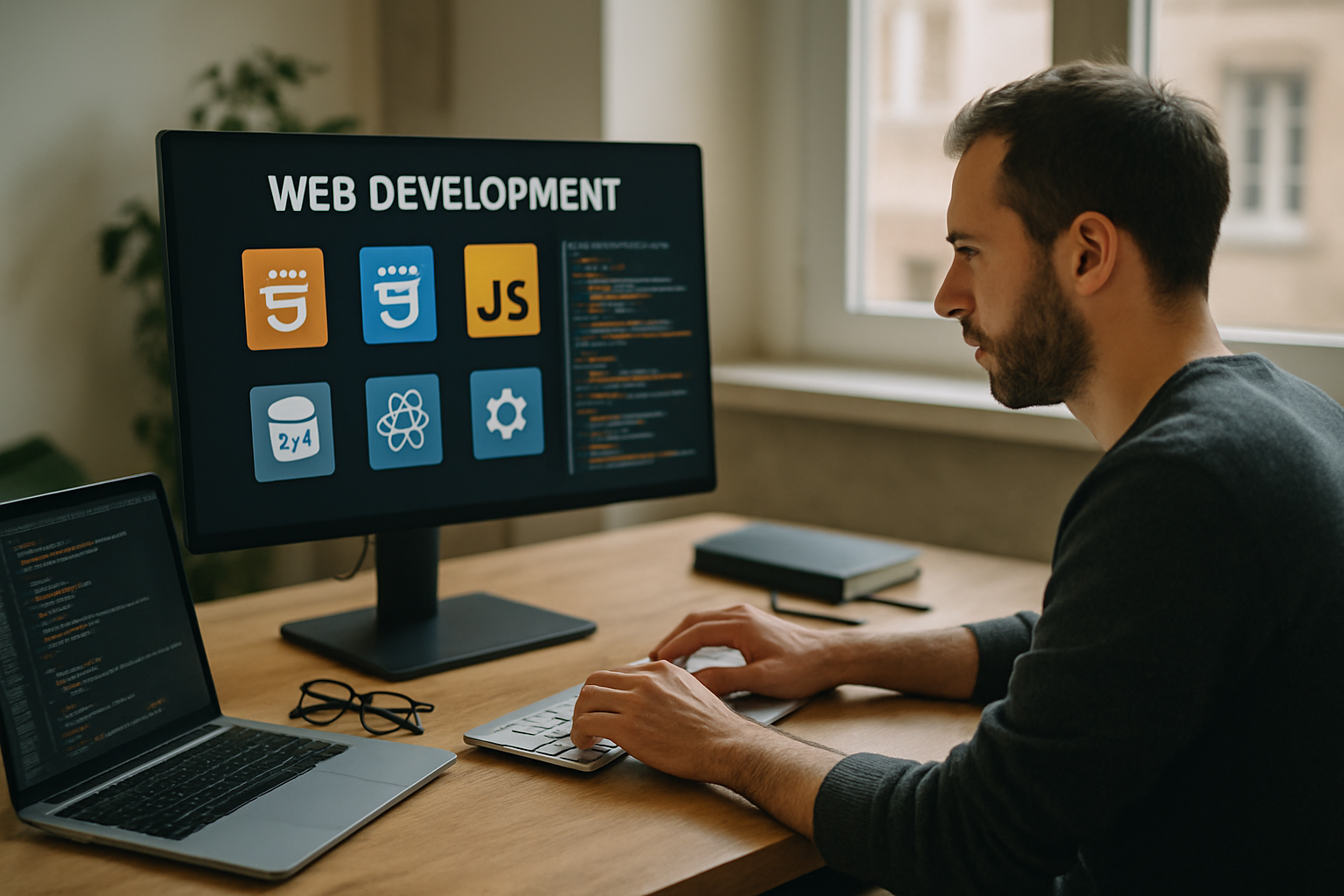
A web development technology stack is the combination of programming languages, frameworks, databases, and infrastructure used to build and run your website or app. There's no single "best" stack. The right choice depends on your project type, budget, timeline, and who you can hire to maintain it in Singapore's talent market.
Most businesses shopping for a website or web app get stuck here because every developer they talk to pushes a different answer. That's not because one is lying. It's because the "right" stack genuinely depends on your specific situation, and most advice online skips that part. This guide walks through what a web development technology stack actually is, how the pieces fit together, what each major option costs you in practice, and how to make the call without needing a computer science degree.
Key Takeaways
- A web development technology stack has four core layers — frontend, backend, database, and hosting/infrastructure — and each layer shapes who you can hire and how much maintenance will cost.
- Popular combinations like MERN, LAMP, and Django-based stacks each suit different project types: content sites, data-heavy apps, e-commerce, or real-time platforms.
- The biggest hidden cost isn't the framework. It's the local hiring pool. A niche stack in Singapore's SME-heavy dev market means longer hiring cycles and higher rates.
- Full-stack development (one team handling frontend and backend) is usually more cost-efficient for small-to-mid projects than juggling separate specialists.
- Before locking in a stack, get a second opinion from a developer who's shipped production apps in it, not just read about it.
What Is a Web Development Technology Stack, Exactly?
A web development technology stack is every piece of software involved in building and running your site or application — from what the visitor sees in their browser down to the server that stores your data. Think of it in four layers:
- Frontend — what users see and click: HTML, CSS, JavaScript, and a framework like React, Vue, or Angular.
- Backend — the logic running on the server: PHP, Node.js, Python, .NET, or Ruby, usually paired with a framework.
- Database — where your data lives: MySQL, PostgreSQL, MongoDB, or similar.
- Infrastructure — where it all runs: a cloud provider (AWS, Google Cloud, DigitalOcean), or a managed hosting platform.
People bundle common combinations of these layers into named stacks because certain technologies work well together and get built out with a large support community. That's where terms like MERN, LAMP, and Django + PostgreSQL come from. They're shorthand for "these four things, tested together, at scale, by thousands of teams."
Why the Stack Choice Matters More Than It Seems
Your tech stack isn't just a technical decision. It's a business decision disguised as one. It determines:
- How fast you can find developers in the Singapore market when you need to scale or replace someone.
- How much a bug fix or new feature will cost three years from now.
- Whether your app can handle growth — from 500 daily users to 50,000 — without a costly rebuild.
- How well your systems integrate with local tools businesses commonly rely on, like PayNow, SingPass-linked authentication, or logistics APIs.
Picking a stack purely because it's trendy, or because one developer prefers it, is how projects end up needing an expensive rewrite 18 months in.
 Photo by Pixabay on Pexels (Pexels License)
Frontend vs Backend: What's the Actual Difference?
 Photo by Daniil Komov on Pexels (Pexels License)
This is one of the most common questions business owners ask before their first developer conversation, so it's worth answering plainly.
Frontend is everything the user directly sees and interacts with — buttons, forms, page layouts, animations, the checkout flow. Backend is everything happening behind the scenes — processing that form submission, checking a password, calculating a shipping fee, saving an order to the database. A useful analogy: the frontend is the dining room of a restaurant, the backend is the kitchen. Customers only see one of them, but both have to work for the meal to arrive.
| Layer | Handles | Common technologies | Typical skill focus |
|---|---|---|---|
| Frontend | UI, layout, interactivity, responsiveness | React, Vue.js, Angular, HTML/CSS | Visual design logic, user experience, browser behavior |
| Backend | Business logic, authentication, APIs, data processing | Node.js, PHP/Laravel, Python/Django, .NET | Server logic, security, performance, integrations |
| Database | Storing and retrieving data | MySQL, PostgreSQL, MongoDB | Data modelling, queries, backups |
| Infrastructure | Hosting, scaling, deployment | AWS, Google Cloud, DigitalOcean, Vercel | Uptime, scaling, security patching |
Most modern web projects need both frontend and backend work. That's why "full-stack development" has become the default way small and mid-sized businesses hire.
Full-Stack Development: Why It's the Practical Default for SMEs
Full-stack development means one developer or team is comfortable working across the entire stack — frontend, backend, and often the database and basic infrastructure too. For a startup or SME in Singapore building a business website, booking system, or internal tool, this is usually the more sensible route than hiring a frontend specialist and a backend specialist separately.
The reasons are practical, not just about cost:
- Fewer handoffs. A single team that owns the whole build doesn't lose time in back-and-forth between a frontend contractor and a backend contractor arguing over an API contract.
- Faster iteration. Changing a feature often touches both the UI and the server logic. A full-stack developer can move a feature through both layers without waiting on someone else's availability.
- Lower coordination overhead, which matters a lot for a first website or MVP where the budget doesn't stretch to a large team.
Full-stack development isn't automatically "better." A large enterprise system with heavy traffic, strict compliance needs, or complex data pipelines may genuinely need dedicated specialists at each layer. But for the majority of business websites, booking portals, e-commerce stores, and internal dashboards commissioned in Singapore, a capable full-stack team is the more efficient path. jilian.dev builds on this full-stack approach specifically so SMEs aren't paying for coordination between separate teams.
The Most Common Web Development Stacks Compared
 Photo by Pixabay on Pexels (Pexels License)
Rather than list every framework that exists, here's what actually gets used in production, what it's genuinely good at, and where it falls short.
| Stack | What it's made of | Best suited for | Trade-off to know |
|---|---|---|---|
| MERN | MongoDB, Express, React, Node.js | Real-time apps, dashboards, SPAs, JavaScript-only teams | Flexible but unopinionated — teams often build inconsistent conventions across projects |
| LAMP | Linux, Apache, MySQL, PHP | Content sites, standard business websites, blogs | Extremely well-supported and cheap to staff, but feels dated for highly interactive apps |
| Laravel (PHP) | PHP with the Laravel framework, usually + MySQL | Business web apps, admin portals, booking systems | Opinionated (one standard way to do things), which speeds onboarding and keeps code consistent |
| Django + PostgreSQL | Python, Django framework, PostgreSQL | Data-heavy apps, anything touching analytics or AI features | Excellent for rapid backend development; frontend still needs a separate framework |
| .NET | C#, ASP.NET, SQL Server | Enterprise systems, regulated industries, internal tools | Strong tooling and long-term support, but a smaller freelance/SME talent pool locally |
| Next.js + PostgreSQL | React-based Next.js, Prisma/Drizzle, PostgreSQL, cloud hosting | Modern marketing sites, e-commerce, apps needing SEO + interactivity | Fast, SEO-friendly rendering, but requires developers comfortable with newer React patterns |
None of these is objectively "the best" stack. That framing is the trap. The right one depends on your project type, your budget for ongoing maintenance, and who's actually available to hire or retain in the Singapore market when you need help.
Choosing by Project Type
If you're not sure where to start, work backward from what you're actually building:
- Simple business website or brochure site — LAMP or a lightweight CMS-based build is usually overkill-free and cost-effective.
- Booking system, internal dashboard, or admin portal — Laravel or Django tends to move fast because so much of the repetitive scaffolding (authentication, forms, permissions) is already handled by the framework.
- E-commerce store — Depends heavily on scale. A small catalog might sit comfortably on WooCommerce (LAMP-based) while a larger, custom storefront benefits from a Next.js or Laravel-based build with a proper database behind it.
- Real-time or highly interactive app (chat, live tracking, collaborative tools) — MERN or a Node.js-based backend tends to handle these patterns more naturally.
- Data-heavy product or anything touching AI/analytics — Python (Django or FastAPI) has the strongest ecosystem for this.
What a Web Development Technology Stack Actually Costs You
The framework license itself is almost always free. React, Laravel, Django, and Node.js are all open-source. The real cost of a web development technology stack shows up in three places: development time, ongoing maintenance, and hiring.
Development Time and Complexity
Opinionated frameworks (Laravel, Django, .NET) tend to get a standard business app off the ground faster because so much — authentication, routing, database access patterns — comes built-in. Flexible, unopinionated setups (a bare Node.js/Express build, or a highly custom React frontend) can be faster for a very specific, unusual requirement, but slower for standard business features because more has to be built from scratch or assembled from third-party packages.
Ongoing Maintenance
This is the cost businesses underestimate most. Every stack needs:
- Security patches for the framework and its dependencies, ideally on a regular cadence rather than "when something breaks."
- Hosting and infrastructure costs, which scale with traffic and data volume regardless of which stack you picked.
- Someone who can actually read the code when it breaks at an inconvenient time. AI coding tools have made it easier to write code in an unfamiliar stack, but someone on your side — in-house or a retained developer — still needs to be able to judge whether that code is correct and debug it under pressure.
Hiring in the Singapore Market
This is the factor most comparison articles skip, and it's arguably the most important one for a Singapore-based business. Mainstream stacks — PHP/Laravel, JavaScript/Node, Python, .NET — have a deep local talent pool across agencies, freelancers, and in-house hires. Pick something exotic or bleeding-edge, and every future hire, every freelance top-up, every handover to a new agency gets slower and more expensive, because there are simply fewer people locally who know it.
If you're planning to eventually build an in-house team, or you want the flexibility to switch developers or agencies down the line without a painful handover, a mainstream, well-supported stack keeps your options open. A custom web solutions build on a mainstream stack is also far easier to hand over to a new developer later than something built on a niche or highly experimental framework.
How to Find a Good Web Developer in Singapore
Once you've got a rough sense of the stack you need, the harder part is often finding someone reliable to build it. A few things genuinely separate a good hire from a risky one:
- Ask to see production work, not just a portfolio screenshot. A live site or app you can click through tells you far more than a mockup.
- Ask what stack they're proposing and why. A developer who can explain the trade-off in plain terms — not just "because it's modern" — is more likely to have thought it through for your situation specifically.
- Check how they handle handover and documentation. If they disappear, can another developer pick up the codebase without starting over? Ask this directly before you sign anything.
- Clarify who owns the code and the hosting accounts. Some agencies quietly retain admin access, which can trap you if the relationship sours.
- Get a fixed scope and timeline in writing for anything beyond a small fix — vague "we'll figure it out as we go" engagements are where budgets balloon.
- Look for full-stack capability if your project is small-to-mid sized. It usually means fewer people to coordinate and fewer gaps between frontend and backend responsibilities.
A reasonable way to vet this quickly: ask a candidate developer or agency to walk you through how they'd architect your specific project — the layers, the reasoning, the rough timeline. Vague, generic answers are a signal to keep looking. Specific, honest trade-off discussion (including "here's where this stack would struggle for you") is a good sign. For a broader look at how a project typically moves from idea to launch, the web development guide breaks down the stages in more detail.
Software Developer vs Web Developer: Which Do You Actually Need?
This question comes up constantly, and the honest answer is: it depends on what you're building, but for most business websites and web apps, you want a web developer — or more specifically, someone with full-stack web development experience.
A software developer is a broader title that can include people building desktop applications, embedded systems, mobile apps, or backend infrastructure with no web component at all. A web developer specializes specifically in building things that run in a browser — websites, web apps, e-commerce platforms, and browser-based tools — and typically works across some or all of the frontend, backend, and database layers described earlier in this guide.
| Question | Software developer | Web developer |
|---|---|---|
| Building a company website or booking portal? | Overkill for most cases | Right fit — this is their core specialty |
| Building a mobile-only native app? | Often the better fit (iOS/Android specific skills) | Only if using web-based frameworks like React Native |
| Building an internal business tool accessed via browser? | Possible, but web developer usually faster | Right fit |
| Need someone who understands SEO, browser compatibility, hosting? | Not guaranteed | Core part of the job |
If your project runs in a browser — a marketing site, a customer portal, an e-commerce store, a booking system — a web developer with full-stack development experience is almost always the more direct hire. Reserve "software developer" searches for projects that are explicitly not web-based, like a native mobile app or embedded firmware.
Custom Web Solutions vs Off-the-Shelf Platforms
Not every business needs a fully custom-built stack. Platforms like Shopify, WordPress, or Wix run on their own managed stacks and can be the right call for straightforward brochure sites or standard online stores. You're trading flexibility for speed and lower upfront cost.
Custom web solutions make sense once you hit the limits of what a template platform can do:
- You need workflows or integrations specific to your business (custom booking logic, a proprietary calculator, an integration with a local logistics or payment API that off-the-shelf platforms don't support well).
- You're scaling past what a shared, templated platform handles gracefully, and page speed or flexibility is starting to suffer.
- You want full ownership of the code and data rather than being tied to a platform's pricing tiers and limitations.
- Your product is the software — a SaaS tool, a marketplace, an internal operations platform — rather than a marketing presence for a physical business.
A custom stack costs more upfront in development time than a template, but it removes the ceiling that off-the-shelf platforms eventually hit. The trade-off is worth discussing honestly with whoever you hire. A good developer will tell you if a template platform is genuinely the smarter choice for your situation, rather than upselling a custom build you don't yet need.
A Practical Framework for Choosing Your Stack
Strip away the marketing language around any given framework and the decision comes down to five honest questions:
- Can you (or your hire) actually maintain this in two years? A stack you understand well beats a stack that scored higher on a feature comparison chart you found online.
- Does it match your project type? Content site, data-heavy app, real-time platform, and enterprise system all point toward different reasonable choices — refer back to the comparison table above.
- Is the local talent pool deep enough? In Singapore, mainstream choices (PHP/Laravel, Node.js, Python, .NET, React) give you a much larger hiring pool than something exotic.
- What's your realistic timeline and budget? Opinionated frameworks generally get a standard business app to launch faster; highly custom or unconventional stacks take longer but may pay off for genuinely unusual requirements.
- Who owns this after launch? If you're not keeping an in-house developer, make sure whoever built it hands over documentation and access cleanly, and that the stack is common enough that another developer can pick it up later.
If you walk through those five questions honestly, you'll usually land on one of the mainstream combinations covered earlier in this guide. That's fine. Boring and well-supported beats trendy and thin on hiring options, almost every time, for a standard business project.
According to the Infocomm Media Development Authority (IMDA), Singapore's digital economy continues to depend heavily on a strong pipeline of software and web development talent, which is part of why sticking to widely-supported technology stacks tends to serve local businesses better over the long run than chasing whatever framework is trending that year.
FAQs
What is the most commonly used web development technology stack for small businesses? For straightforward business websites, LAMP (Linux, Apache, MySQL, PHP) or a Laravel-based build remains one of the most common choices because it's cost-effective, well-documented, and easy to staff. For apps that need more interactivity, a React-based frontend paired with a Node.js or Laravel backend is typical.
Is full-stack development more expensive than hiring separate frontend and backend developers? Usually the opposite for small-to-mid projects. Full-stack development means one team handles both layers, which cuts down on coordination time and handoff delays. Separate specialists tend to make more sense only on larger, high-traffic systems where each layer needs deep, dedicated expertise.
How do I find a good web developer in Singapore? Look at real production work rather than portfolio mockups, ask them to explain their stack choice and reasoning for your specific project, confirm who retains ownership of the code and hosting accounts, and get scope and timeline in writing. A developer who's upfront about trade-offs — rather than just praising their preferred framework — is generally more trustworthy.
Should I hire a software developer or a web developer for my project? If your project runs in a browser — a website, customer portal, booking system, or e-commerce store — hire a web developer, ideally one with full-stack experience. Reserve "software developer" for projects outside the browser, like native mobile apps or embedded systems.
Can I change my tech stack later if my business grows? Yes, but it's rarely free. Migrating from one stack to another means rebuilding significant parts of the application, so it's worth choosing a mainstream, well-supported stack upfront specifically to delay or avoid that migration. This is one more reason to avoid picking a stack purely because it's trendy.
Next Step
Choosing a web development technology stack isn't about finding the objectively "best" framework. It's about matching your project type, budget, and hiring reality to a combination that your team can actually own and maintain. For most Singapore businesses, that means a mainstream, well-supported stack built by a full-stack team who can explain their reasoning in plain terms.
If you're weighing your options and want a straight answer on what stack fits your specific project, get in touch with jilian.dev for a practical, no-jargon conversation about what to build it on.